
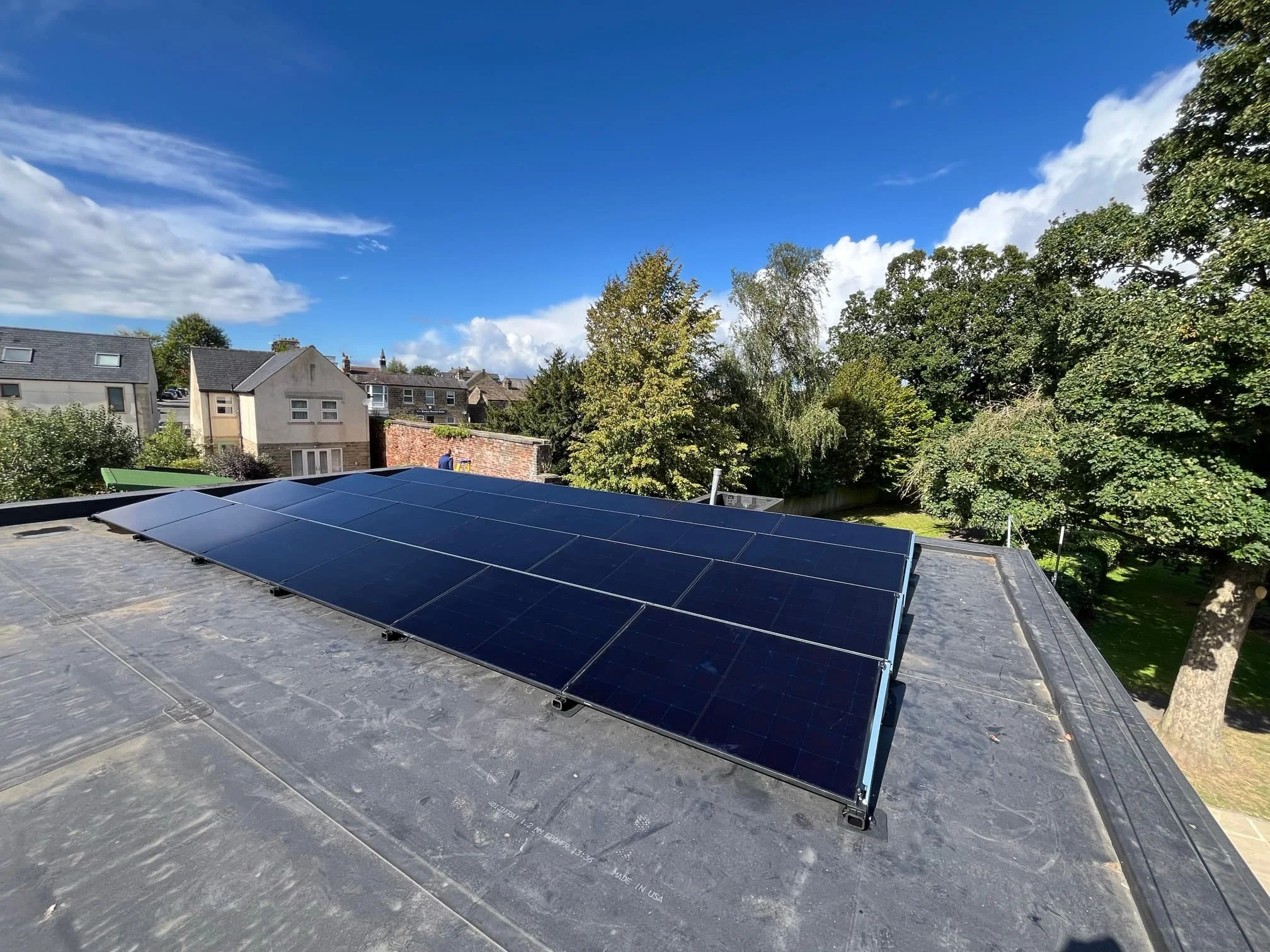
Solar Panels for Community Buildings
Community Solar Installers in Yorkshire & the North
Community buildings run on tight budgets – and when energy costs rise, it’s local services that feel it first. Installing solar panels for community buildings helps you generate electricity on-site, reduce what you buy from the grid, and put more of your money back into the building.
P4 Solar designs and installs tailored photovoltaic systems across Yorkshire and the North for schools, sports clubs, libraries, charities, village halls and more. You’ll get a clear feasibility check, a practical system recommendation, professional installation from an in-house, MCS-certified team, and support after commissioning.
Accredited & Certified







Community Solar Installers: Trusted Across Local Buildings
From school halls and libraries to sports clubs and village halls, these are the places people depend on every week. When energy costs rise, it’s budgets for activities and services that get squeezed first.
Our community solar projects focus on practical cost savings and long-term sustainability – with solar system design tailored to each building’s day-to-day use, helping you improve energy efficiency and reduce environmental impact with proven green energy solutions.
Choose your building type to see typical considerations, how we approach the install, and what to do next.
-
![Solar panel installation on a school building roof, helping educational facilities reduce energy costs, lower carbon emissions and generate renewable electricity.]()
Solar Panels For School Buildings
For education sites with term-time access and weekday use.
-
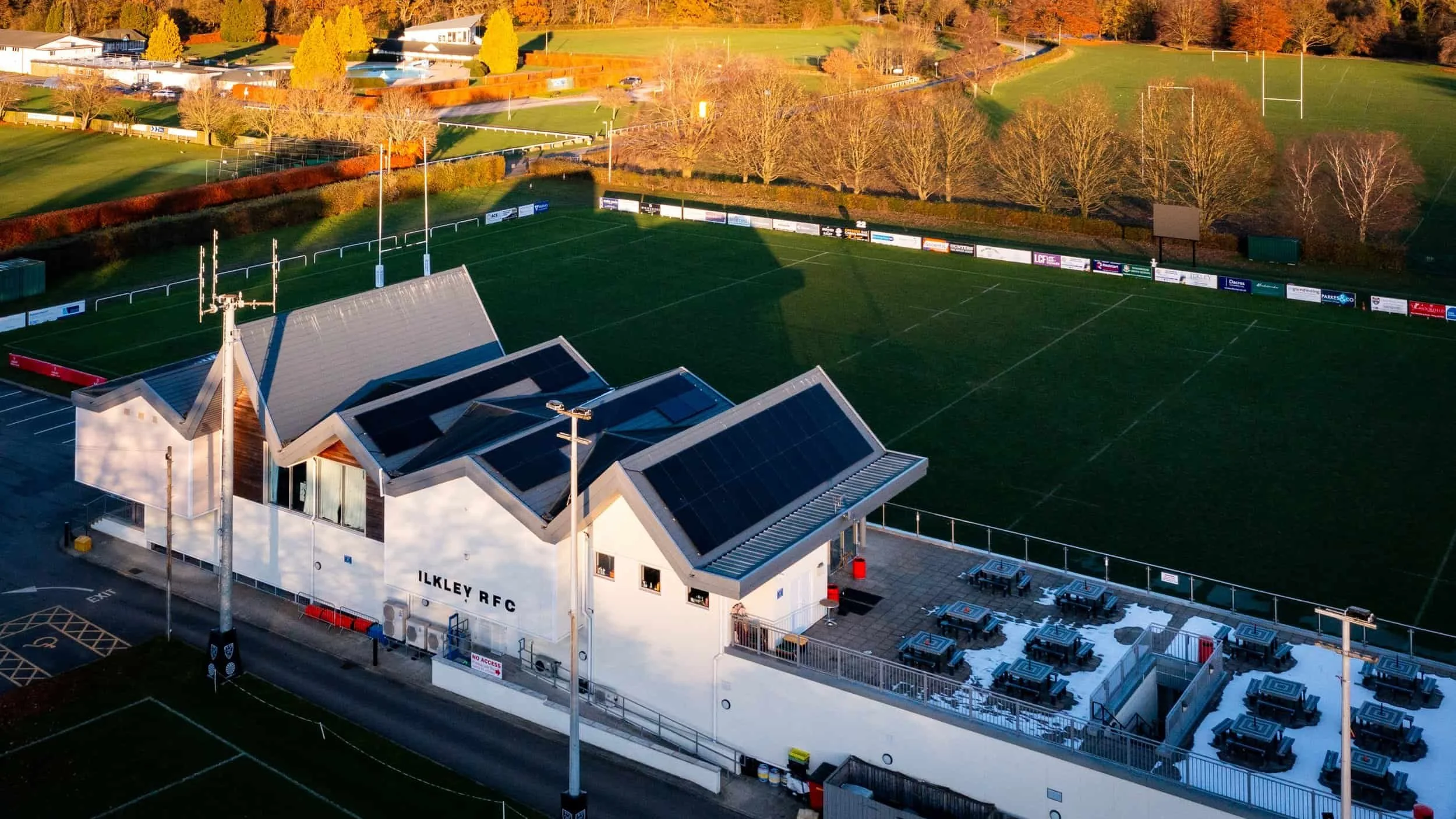
![Aerial view of Illkley Rugby Football Club field with surrounding trees and buildings, late afternoon sunlight]()
Solar Panels For Sports Clubs
For clubhouses and facilities with training and matchday schedules.
-
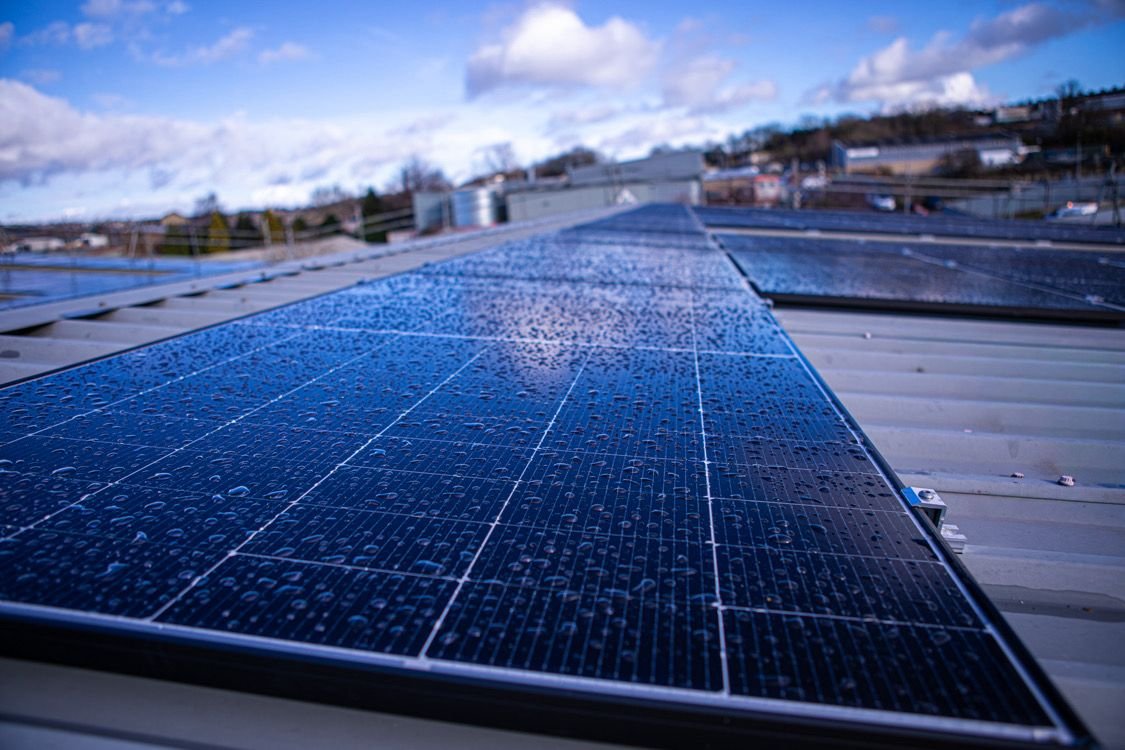
![Solar panels installed on a flat rooftop with trees and a blue sky with some clouds in the background.]()
Solar Panels For Community Libraries
For public buildings with consistent opening hours.
-
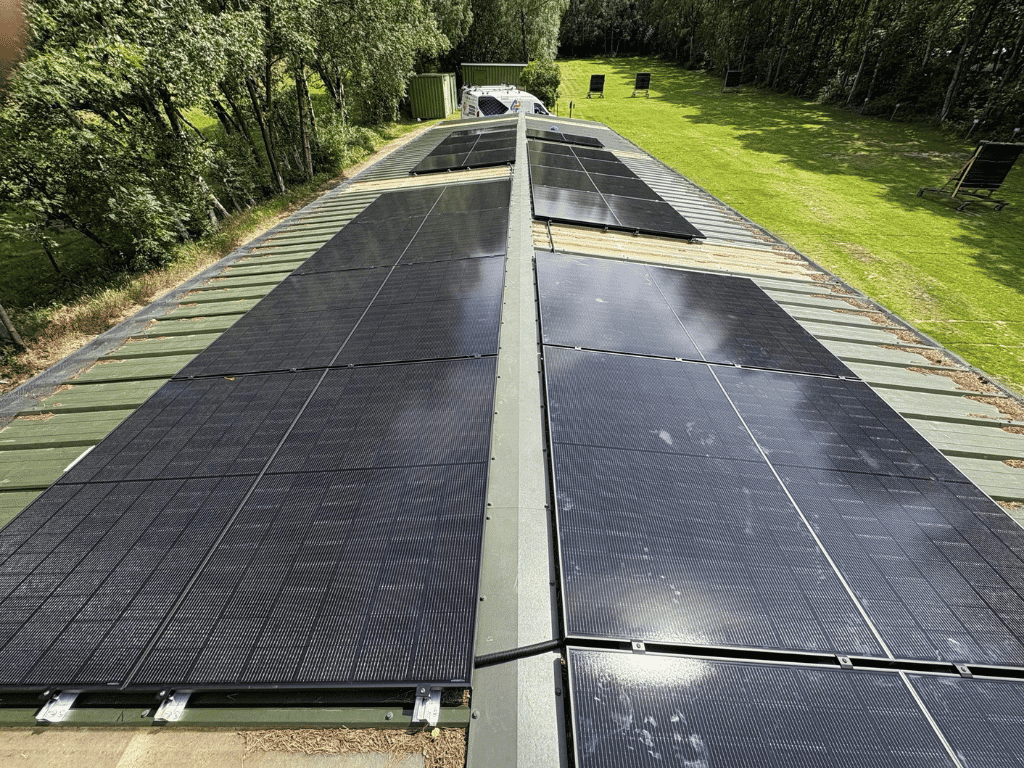
![View of solar panels installed on a metal roof, surrounded by trees and a grassy area with lounge chairs.]()
Solar Panels For Charity Buildings
For charity offices, hubs and community centres.
-
![A house with solar panels on the roof and a grassy yard in the foreground.]()
Solar Panels For Village Halls
For multi-use halls with bookings, events and weekend use.
-
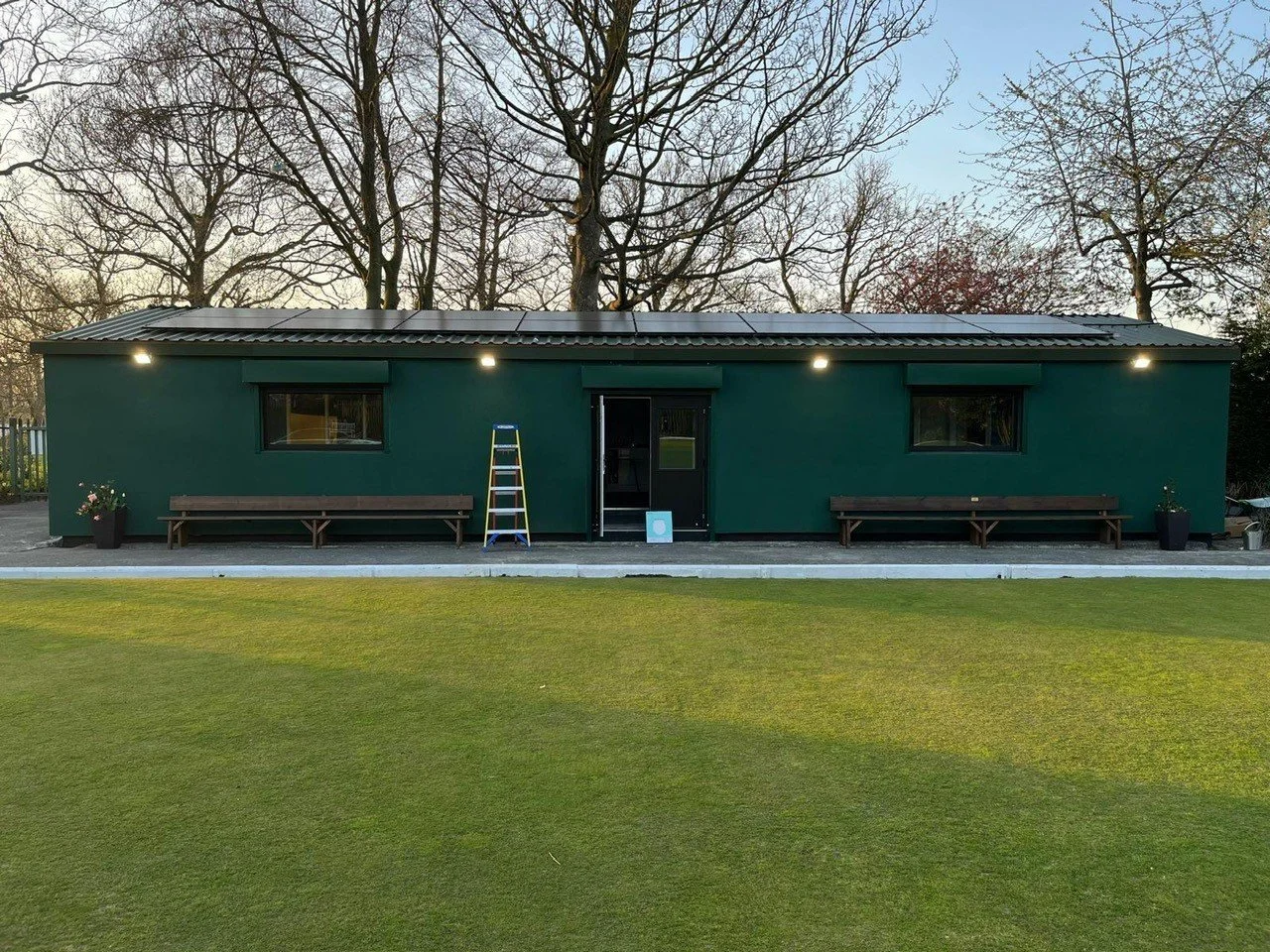
![Single-story green building with a metal roof, surrounded by grass and trees. There are two benches outside, a ladder leaning against the building, and potted plants on either side.]()
Solar Panels For Community Huts & Guide Centres
For smaller community buildings and local group sites.
What to Consider Before Installing Solar on Community Buildings
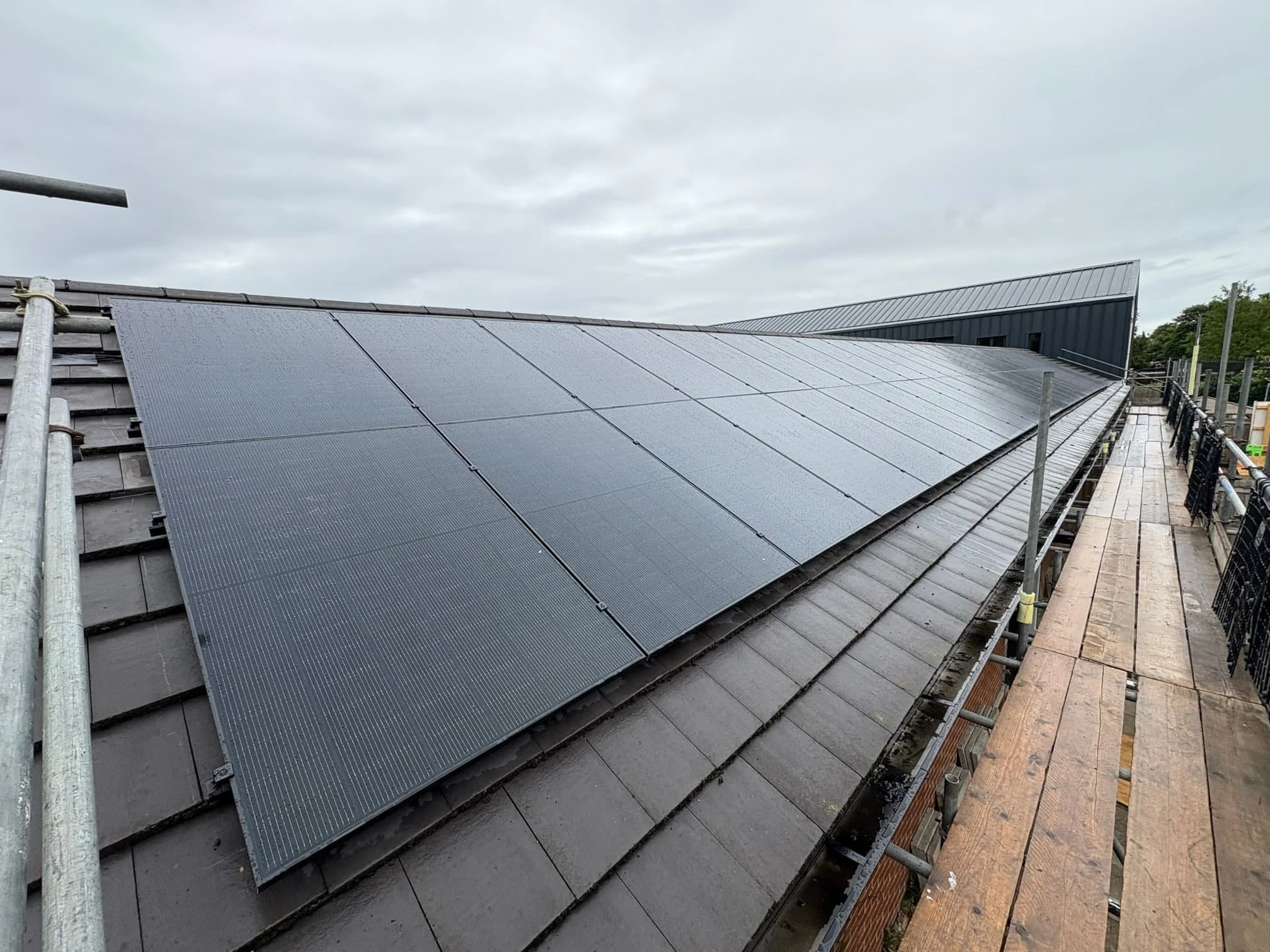
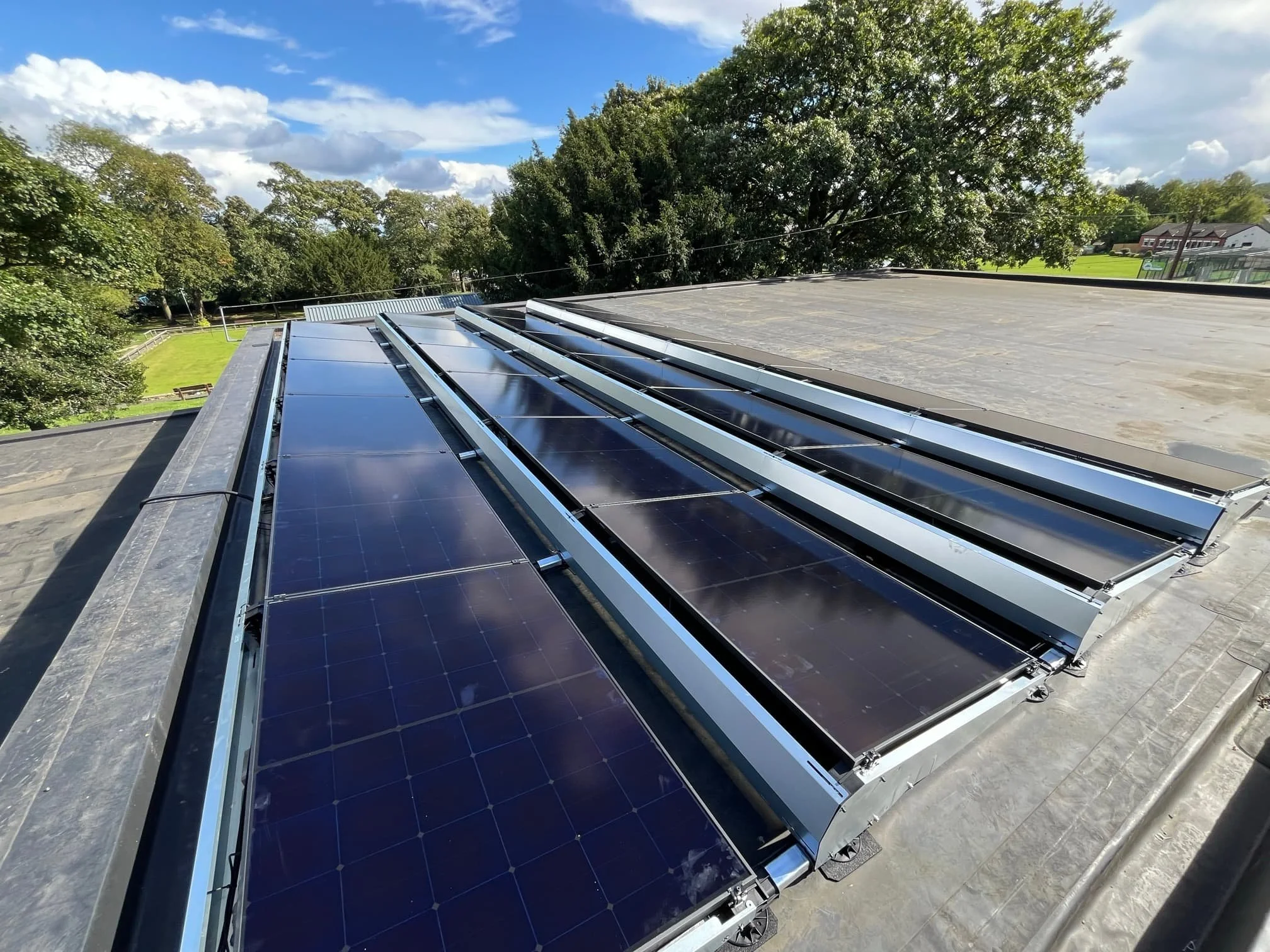
Solar panels for community buildings are usually straightforward to deliver, but the best results come from getting a few practical details clear early. Here’s what we’ll confirm during the first checks, and what can change the recommendation.
-
Many community solar projects can fall under Permitted Development, but some local buildings have extra constraints – especially if the property is listed, in a conservation area, or has roof/visual restrictions.
What you can do now:
Confirm the building status: is it listed or in a conservation area? (If you’re not sure, your council planning portal/listed building search will confirm quickly.)
Check ownership/decision-making: who signs off – trustees, council, committee, headteacher/governors?
Look for roof restrictions: recent roof works planned, known leaks, or areas you’re not allowed to fix into.
If you have drawings: any roof plans or refurb documents are helpful (even basic ones).
We’ll confirm what applies upfront and advise on the most sensible panel placement based on the building’s layout and context. We’ll also check any grid connection requirements and export limitations with the local network where needed, so your solar power installation is designed around real-world connection rules from the start.
-
Community spaces can often stay running while work happens; schools in term time, libraries open to the public, sports clubs with training nights, and village halls with bookings. Before installation, we plan the practical details that keep disruption low.
What helps to confirm upfront (so we can plan around you):
A simple schedule: opening hours, regular sessions, and any fixed dates (events, exams, match days)
Access and working areas: where we can place scaffolding, store materials, and keep walkways/public entrances clear
Site contacts and arrival process: who we meet on site, how access is granted, any sign-in/induction requirements
Any non-negotiables: “no work during X hours”, safeguarding policies, shared building rules, noise limits, or restricted zones
The goal is a predictable install that fits around the building, not a project that forces you to close doors or cancel bookings.
-
The biggest lever for cost savings is how much solar electricity you use on-site. That’s why we look at your day-to-day usage pattern, not just roof size.
What you can do now:
Pull 12 months of electricity bills (or a quick export from your supplier portal).
If you have a smart meter or usage reports that show half-hourly consumption, grab any usage profile/reports – even a screenshot helps.
Note your typical schedule:
opening hours / term-time vs holidays
evenings/weekends (training nights, events, bookings)
big loads: electric heating, hot water, kitchens, laundry, floodlights, IT/server rooms, ventilation
From there, we tailor the solar system design and solar array setup to suit the site – so expected energy savings, energy efficiency gains and environmental impact are realistic and trackable over time.
Solar Battery Storage for Community Buildings
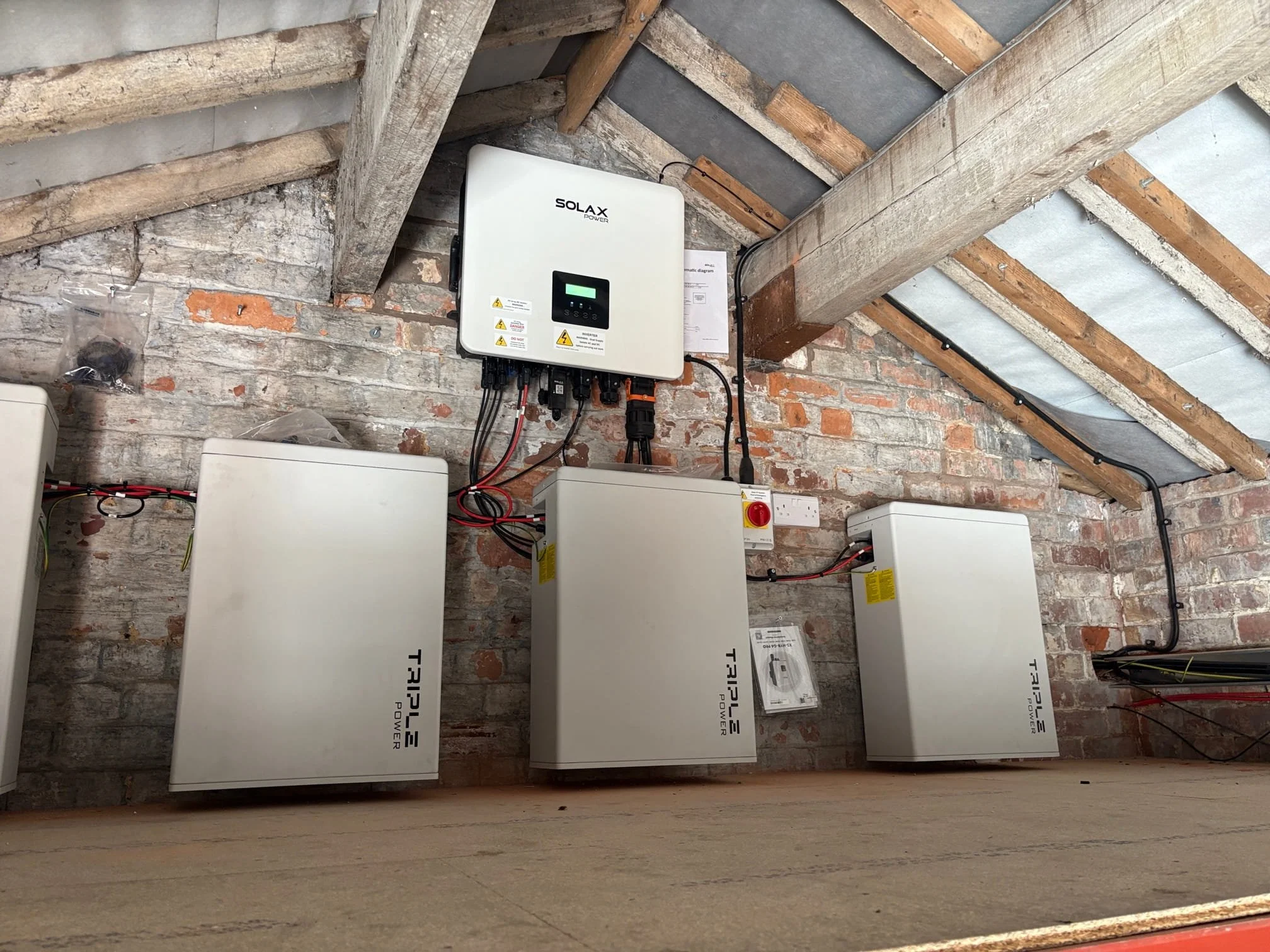
Adding battery storage can make a community solar installation even more effective, storing spare solar generation so you can use it later and reduce grid import when the building is busiest.
Key benefits of adding a battery to your solar setup:
Lower energy bills: use more of your own solar electricity on-site, export less.
Better fit for evening/weekend use: support training nights, bookings, and events with stored solar.
Resilience for essential services: keep key circuits supported during supply interruptions (where configured).
Long-term investment in sustainable power: future-proof your solar system as usage grows or opening hours change.
If you export surplus electricity, you can also earn payments through Smart Export Guarantee (SEG) tariffs. We’ll help you weigh up the best mix of on-site use, storage and export based on your building’s usage and tariff, so you get the strongest overall return.
Our Process: Community Solar Installers
STEP 1
Initial Consultation & Solar Site Assessment
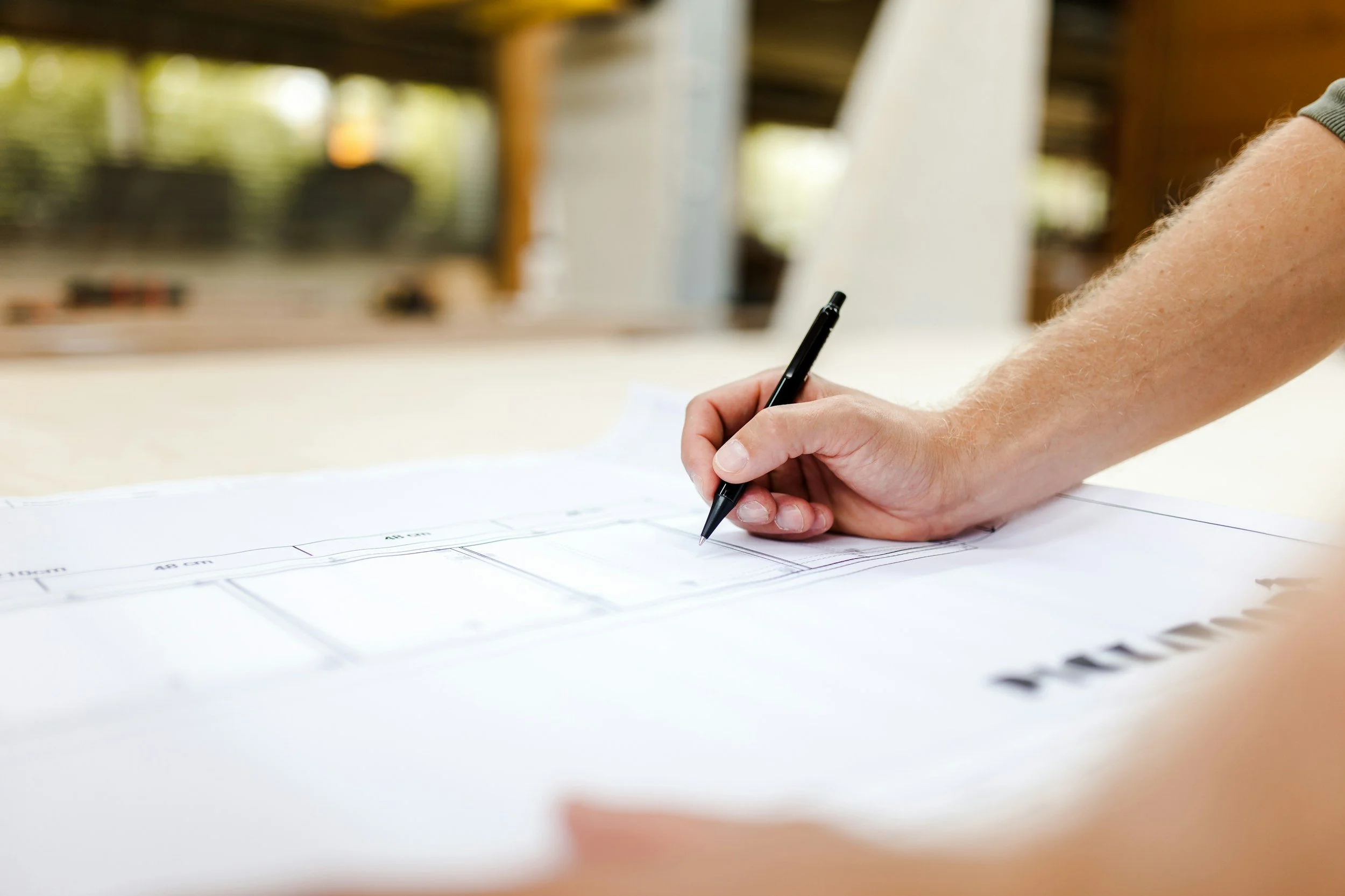
We start with a site survey to assess roof space, shading, access and any building constraints. We’ll also look at how the building uses electricity across the week, so we can confirm what’s realistic before any decisions are made.
STEP 2
Bespoke System Design & Proposal
Next, we design a photovoltaic system around your building: panel layout, inverter approach, and battery storage options where they improve results. You’ll receive a clear proposal outlining expected performance, savings assumptions, and an indicative install plan that supports long-term value and sustainable development goals.

STEP 3
Permissions, Grid Checks & Project Planning
Before installation begins, we confirm any permissions and handle the practical planning that keeps the building running. This can include DNO/grid connection checks and export limitations, plus an agreed plan for access, scaffolding, working zones and “no-go” times around term time, opening hours, events and bookings.
STEP 4
Professional Community Solar Power Installation
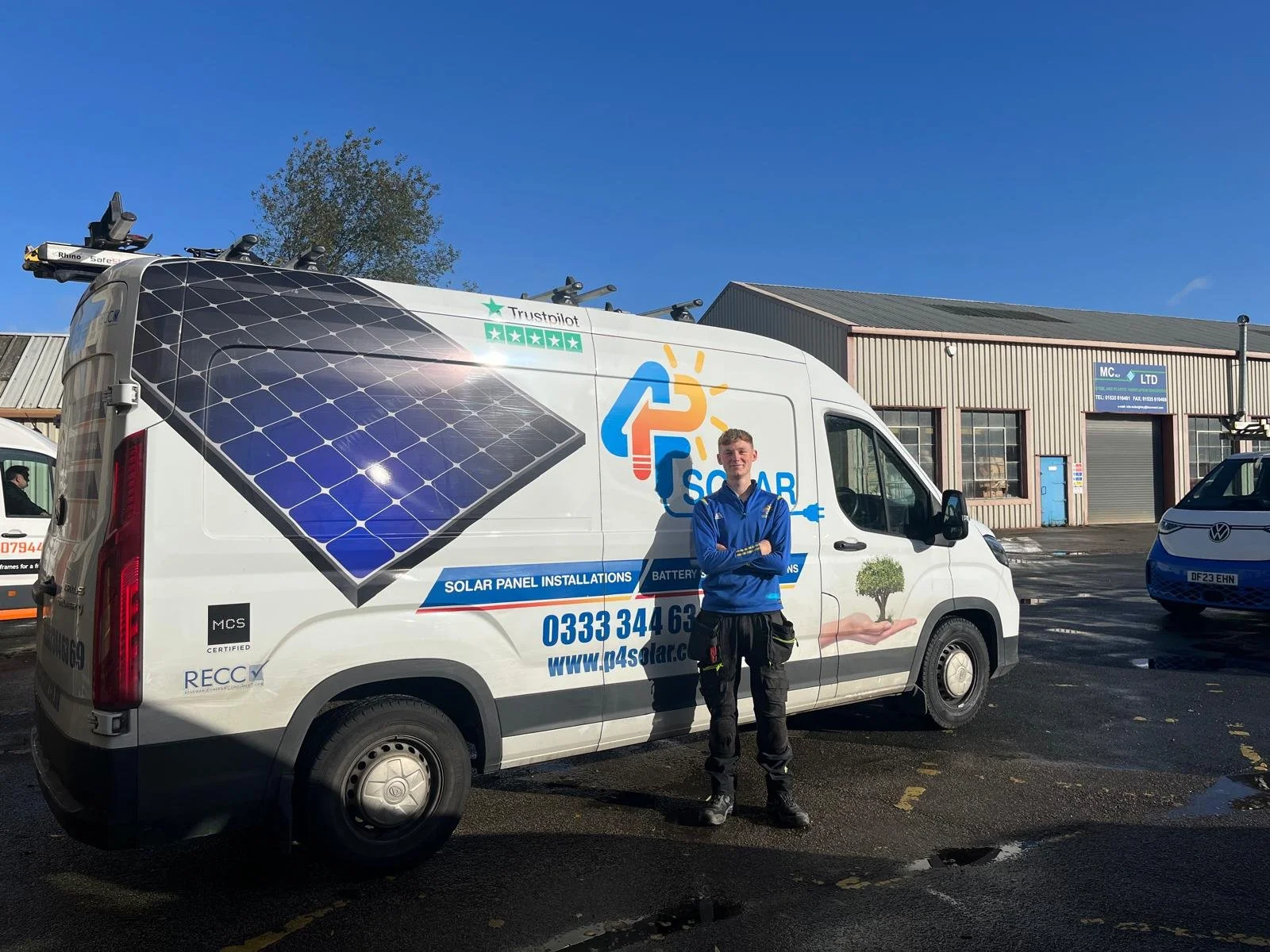
Our in-house, MCS-certified team completes the installation safely and efficiently, keeping the site tidy and disruption low. We stick to the agreed plan and keep comms clear throughout, so you always know what’s happening and when.

STEP 5
Commissioning, Monitoring & Handover
Once installed, we commission and test the system, set up monitoring, and walk you through how it works day to day. You’ll be able to track energy generation and understand what affects output across the year – useful for internal reporting or any green energy programs you’re involved in.
STEP 6
Ongoing Aftercare & Maintenance Support
After switch-on, you’re supported by the same team. We’re here to help with performance questions, monitoring checks, and advice on solar panel maintenance – plus future upgrades like battery storage if your usage changes over time.
Community Solar Projects in Yorkshire & the North
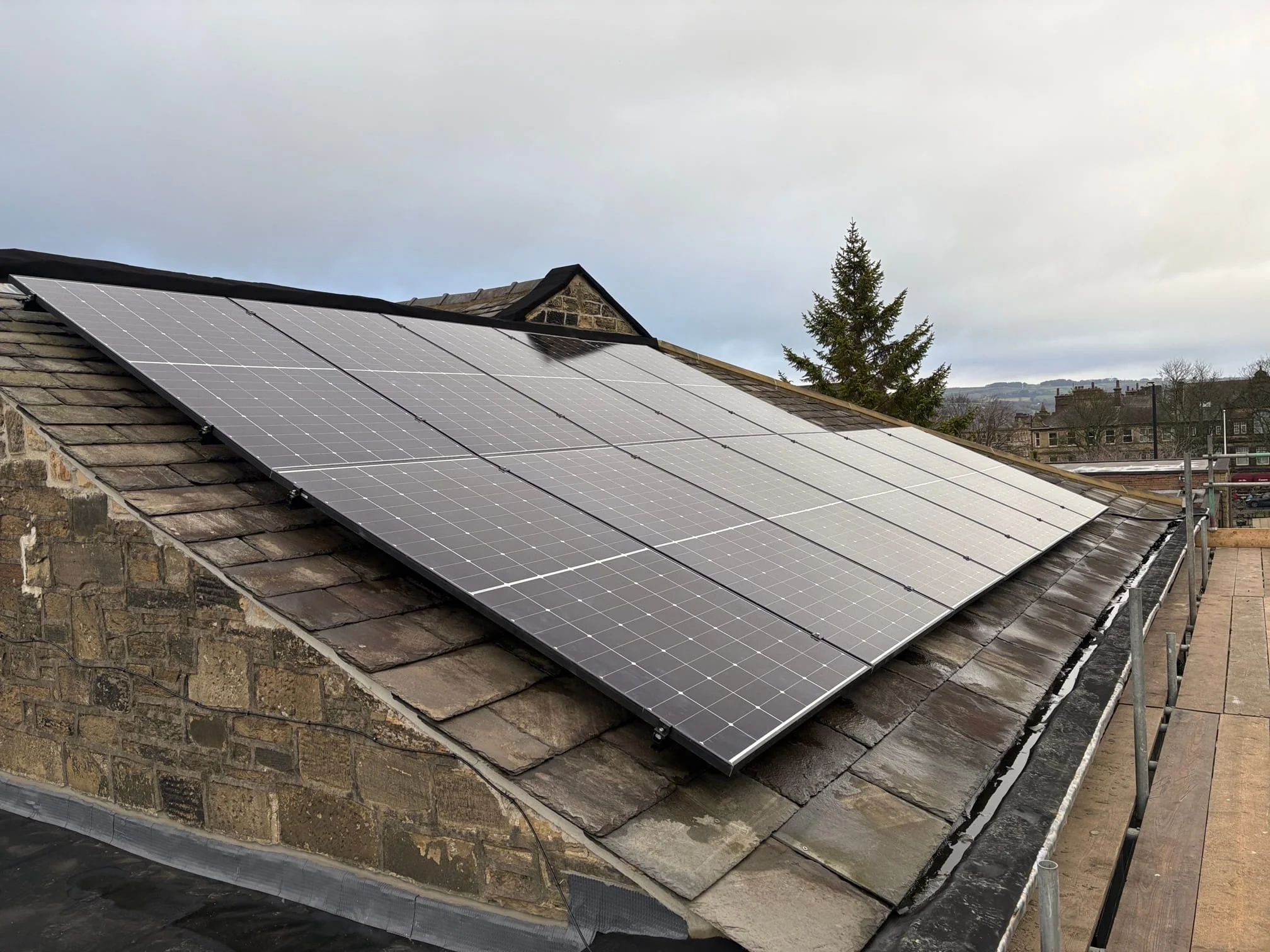
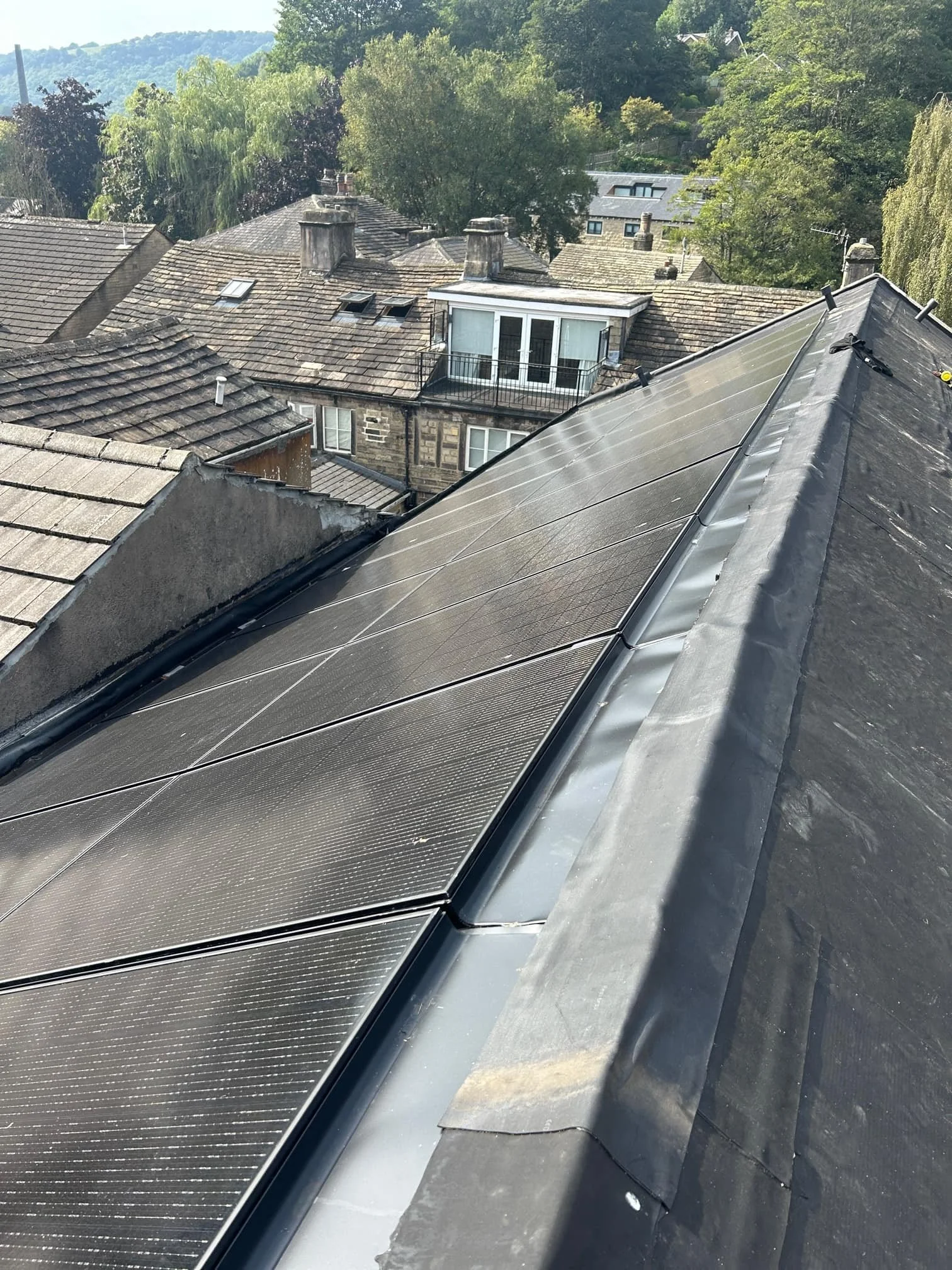
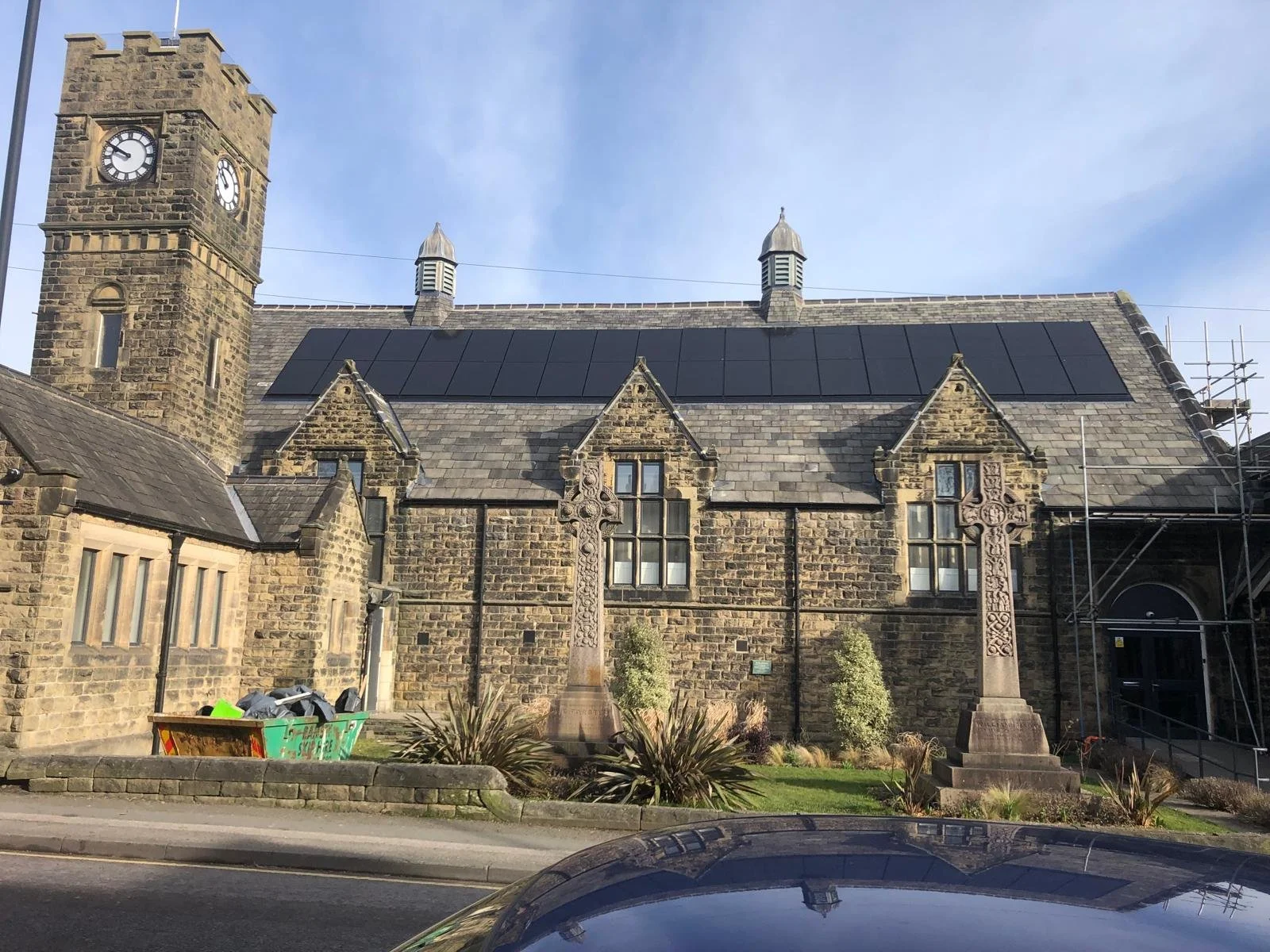
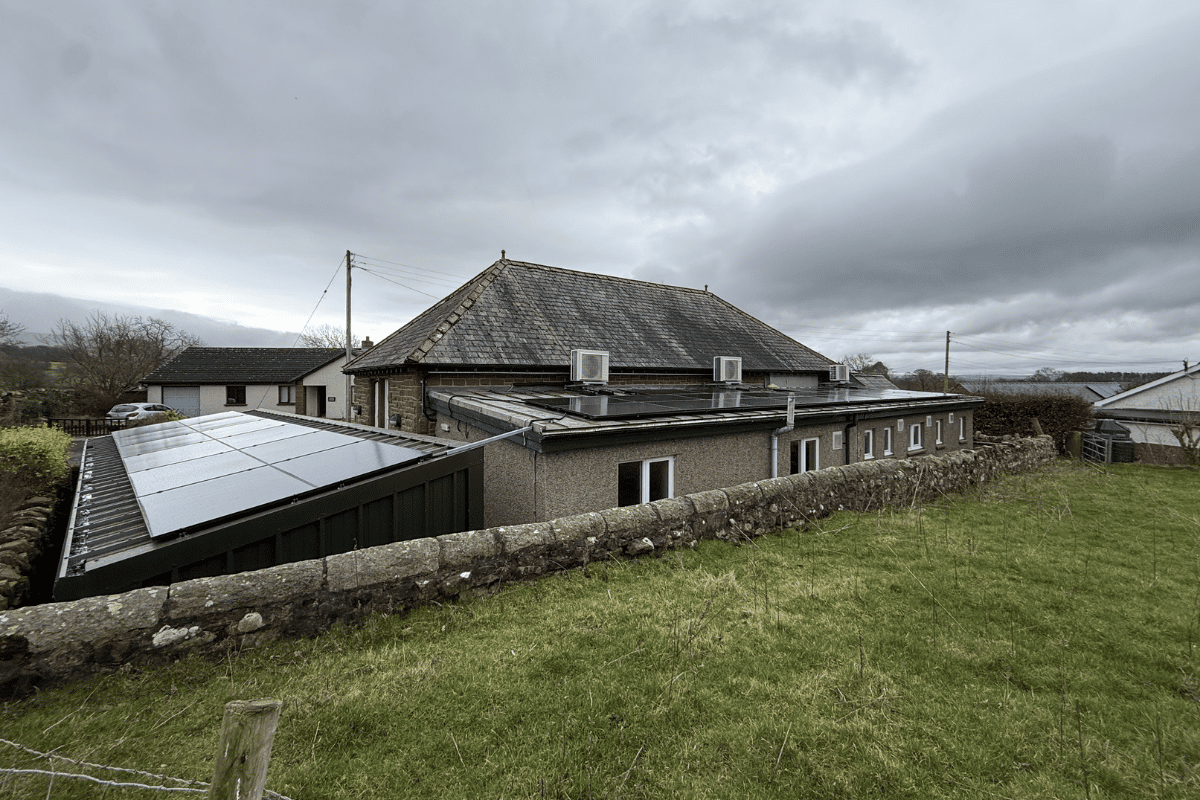
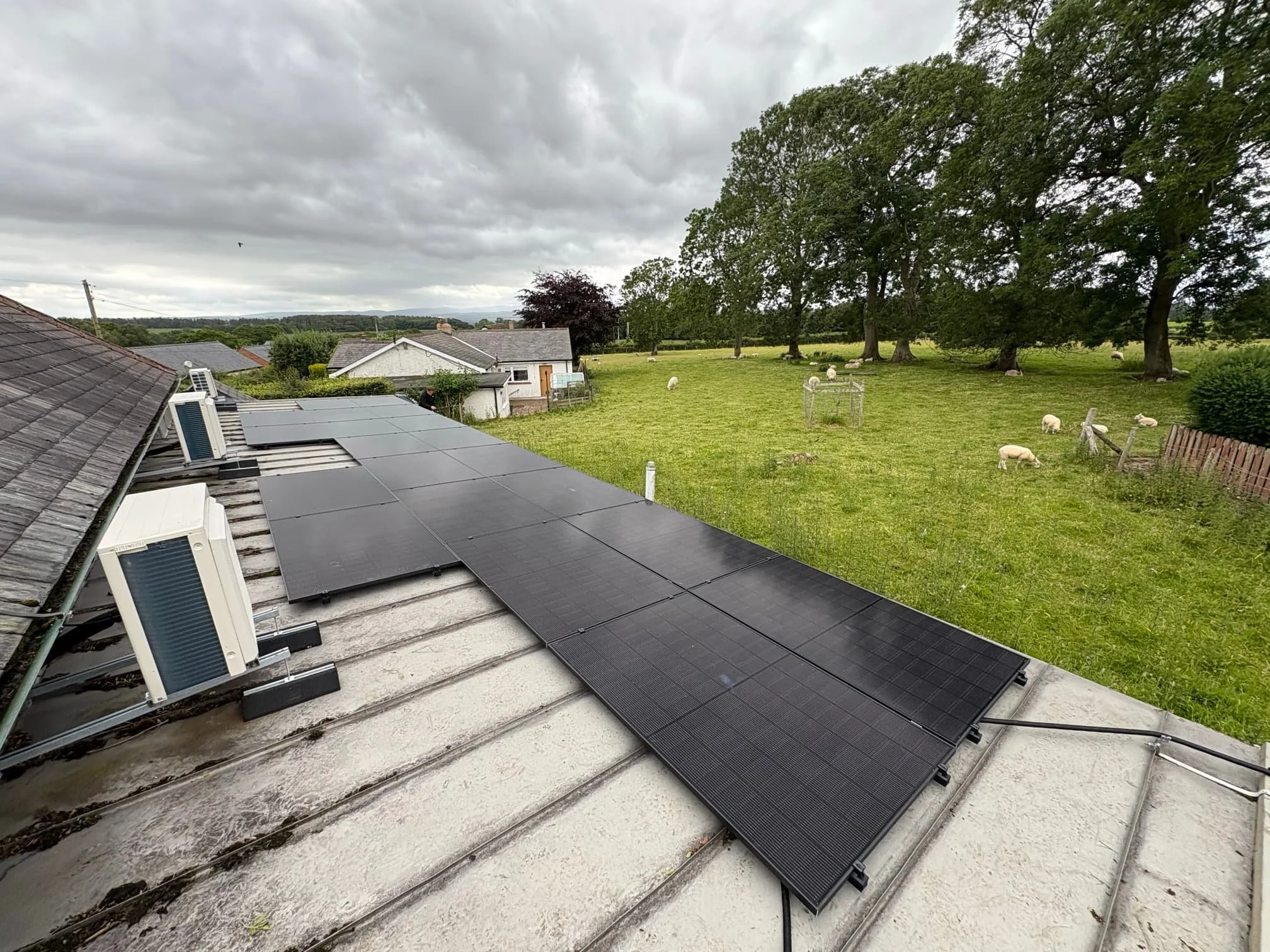
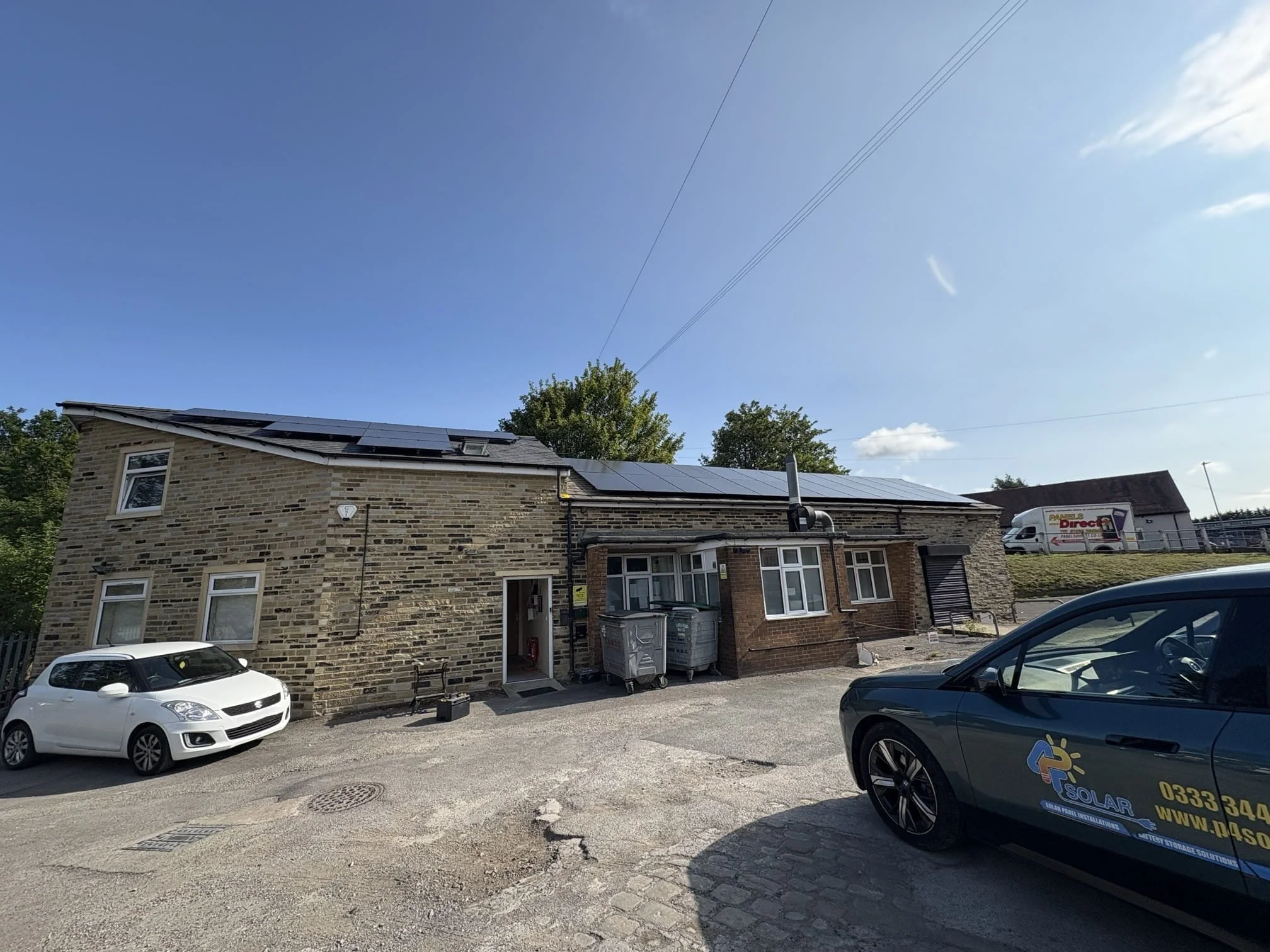
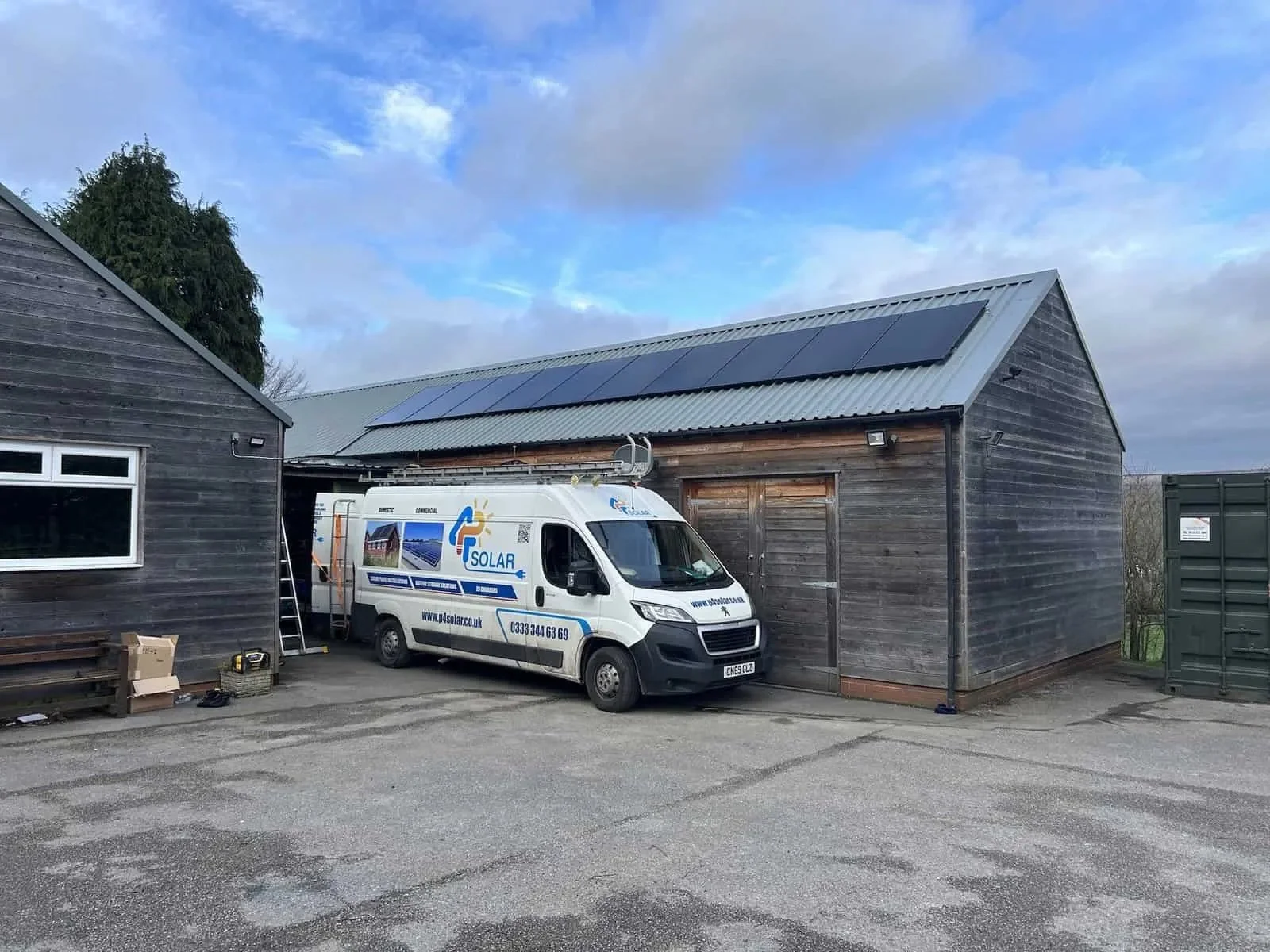
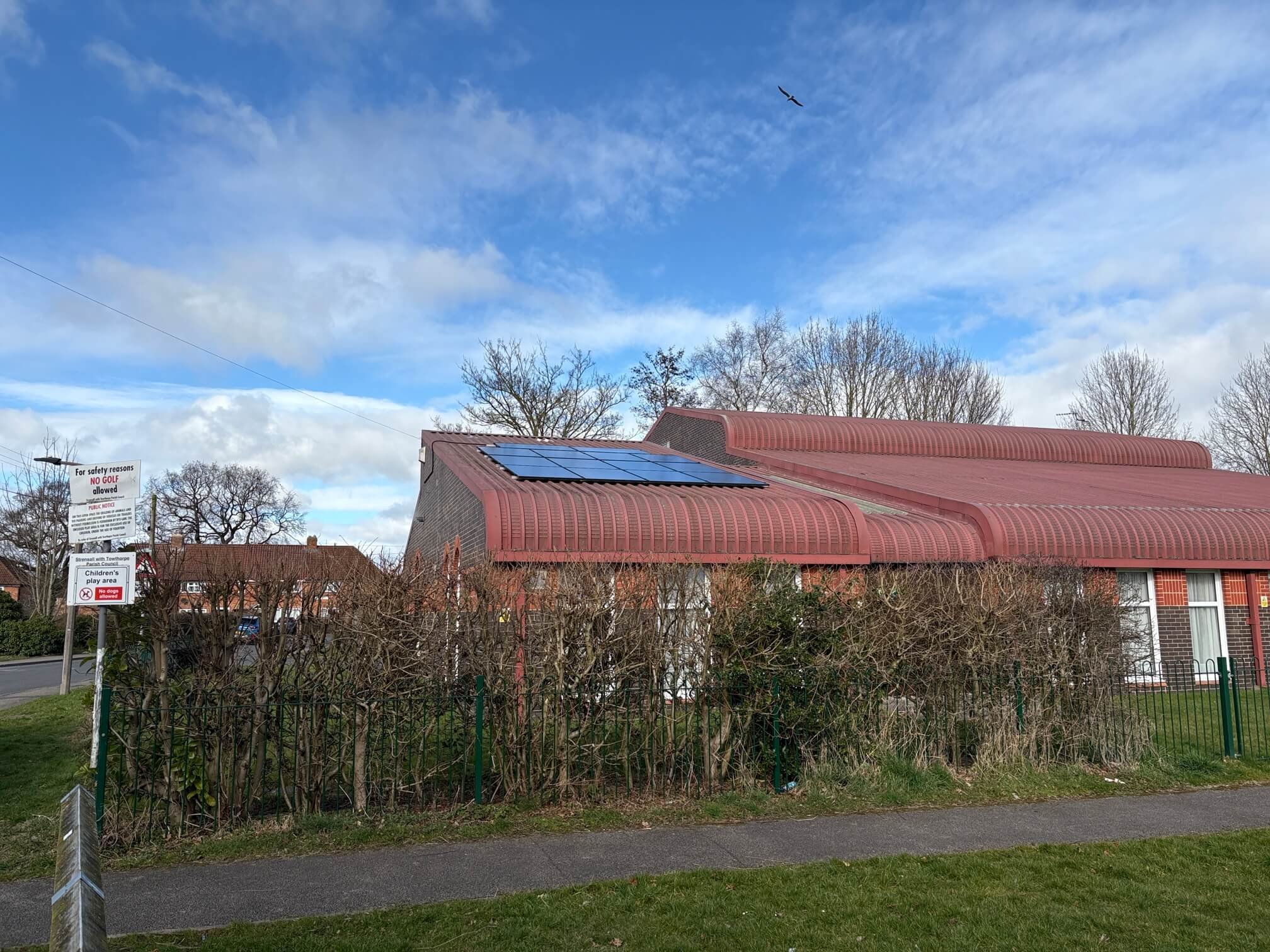
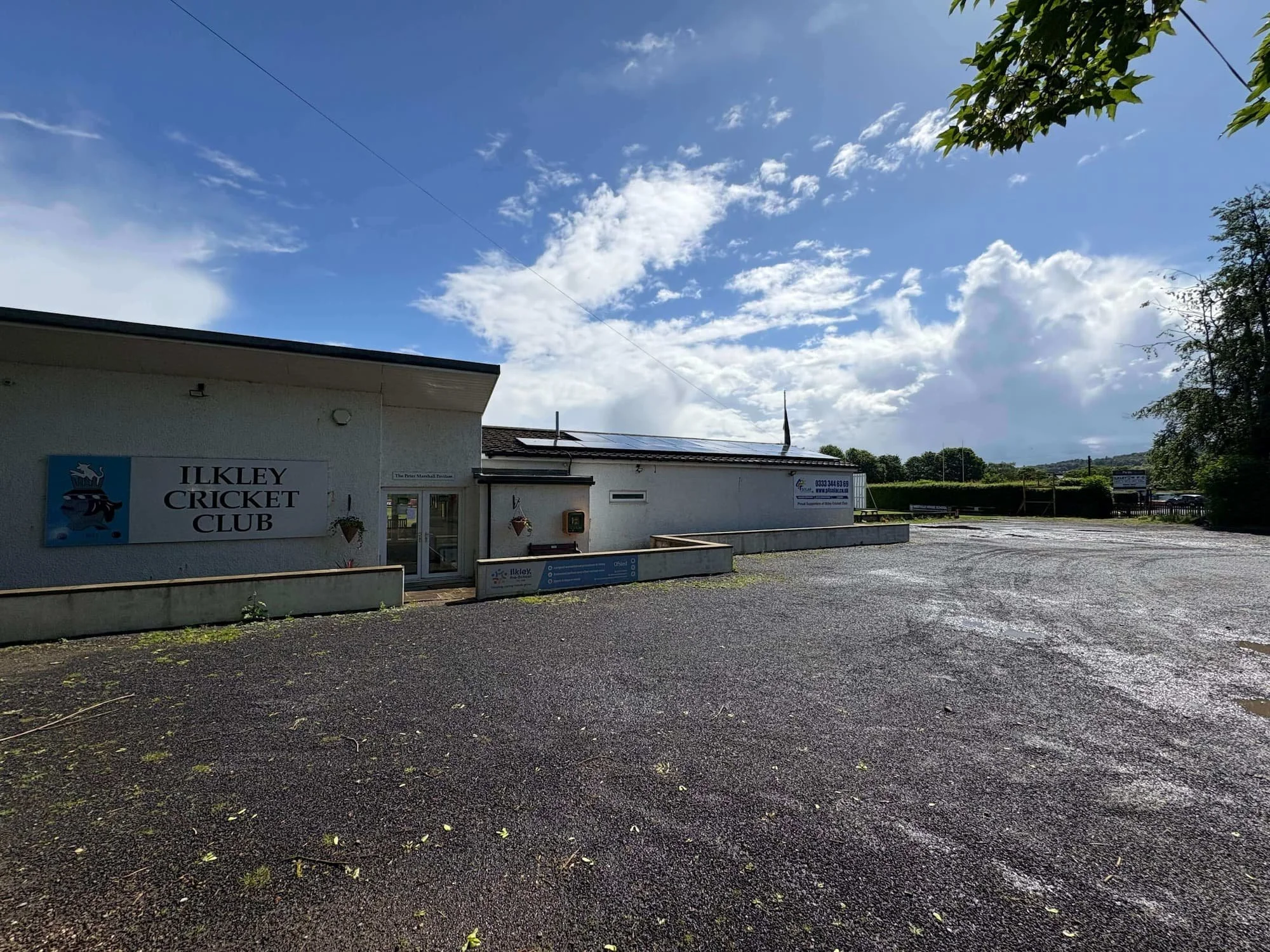
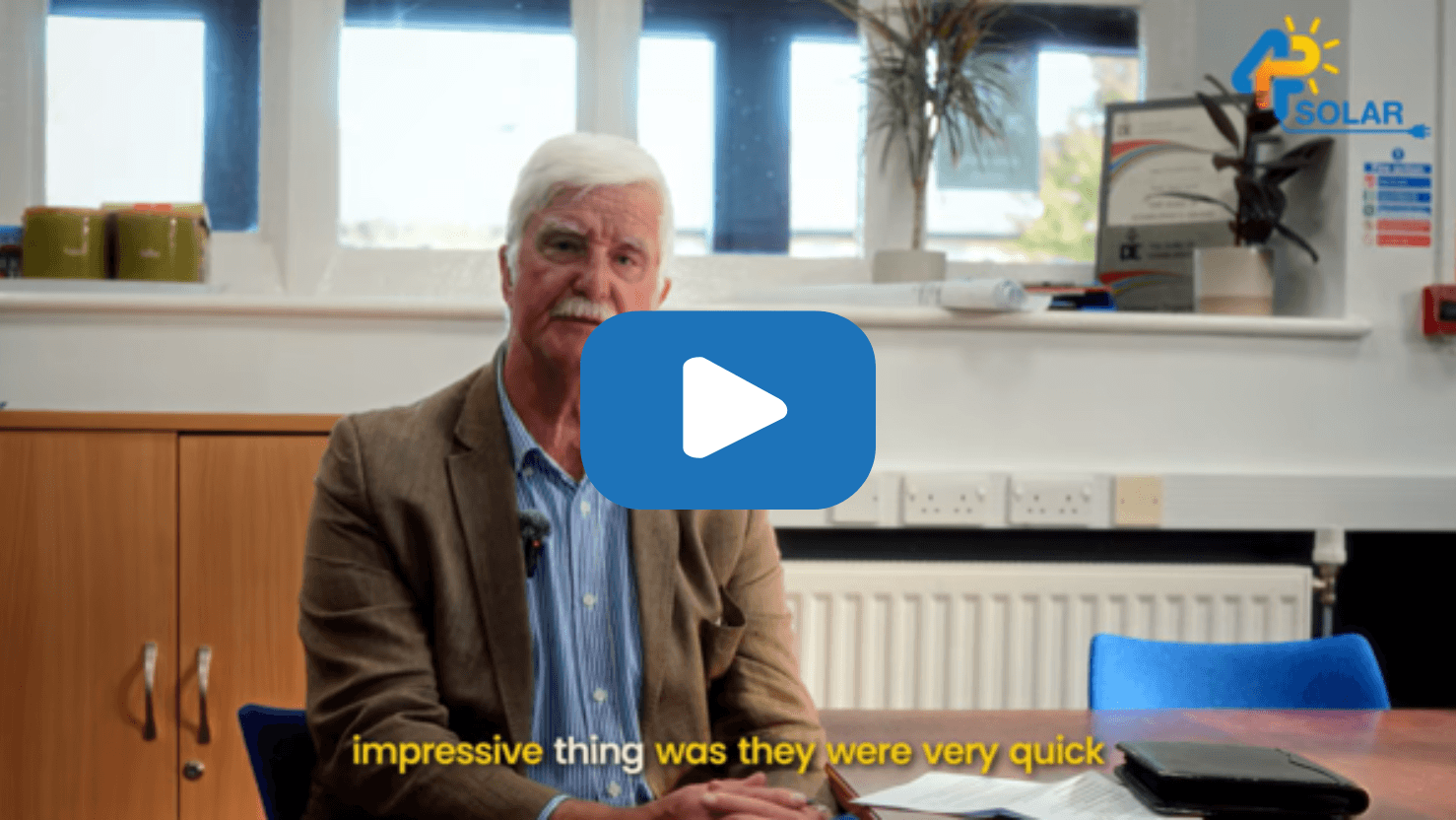
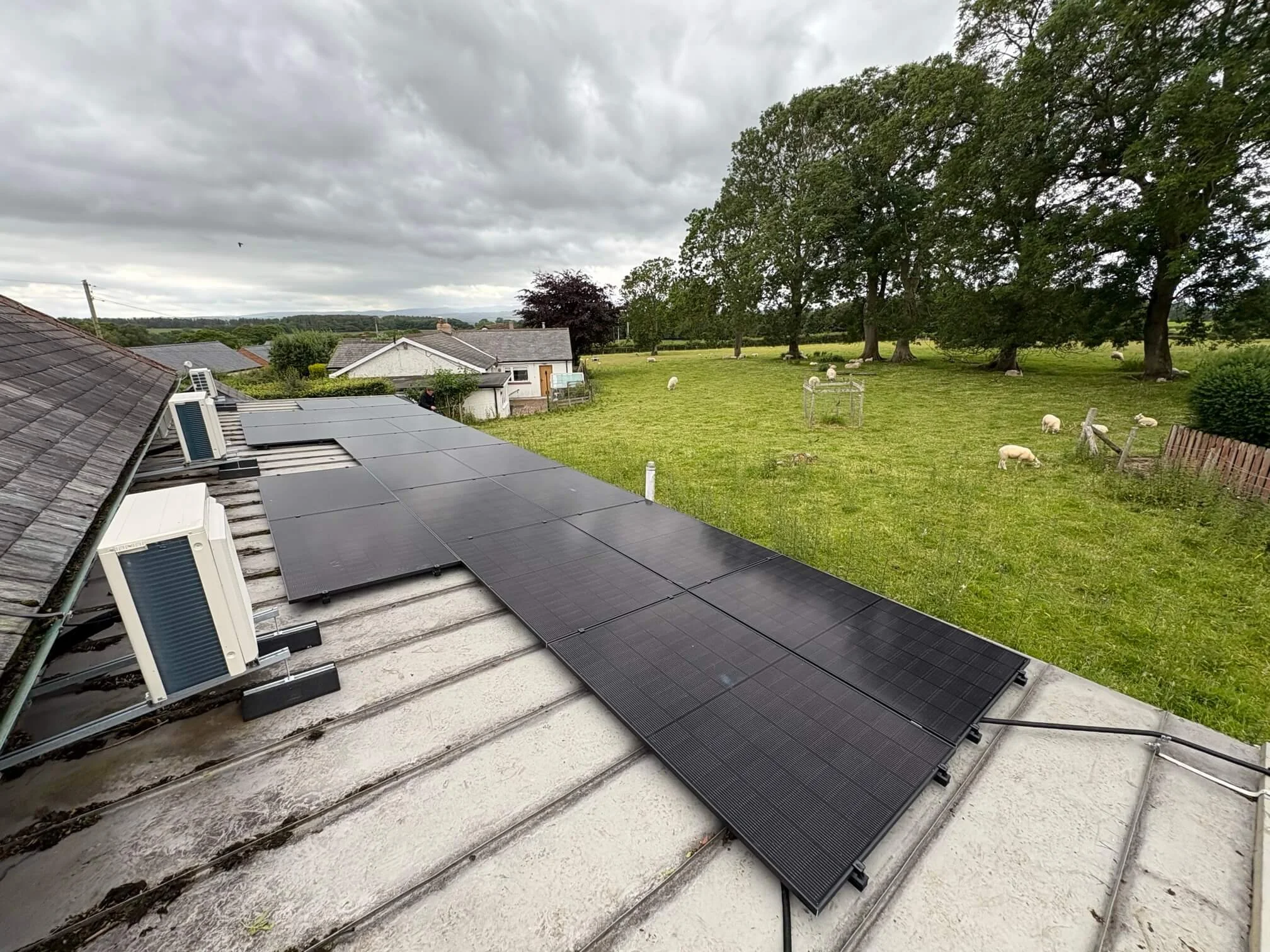
These case studies show what solar panels for community buildings look like in practice: how systems are sized, how installs are delivered around live sites, and what to expect after commissioning. View the project closest to your building to see what’s realistic.

Frequently Asked Questions
-
“Community solar” usually refers to solar power that benefits a local community rather than a single private household. In practice, it most often means solar panels installed on a community building (like a school, village hall, library, sports club or charity building) to generate renewable energy on-site and reduce running costs.
Sometimes it can also mean a wider community-led energy project where a group funds or supports solar across multiple local sites. Either way, the aim is local energy generation, practical energy savings, and a measurable environmental impact.
-
Yes, solar panels for community buildings can be very beneficial – as long as the site has enough usable space (roof-mounted or, where suitable, ground-mounted) and regular electricity use. Key benefits typically include:
Lower energy bills by reducing what you buy from the grid
More predictable running costs over the long term
Reduced environmental impact and stronger community sustainability credentials
Optional export income for surplus electricity via SEG (where applicable)
-
Yes. Smaller community buildings (like scout and guide huts) can still benefit from solar panels – the system just needs to be sized sensibly to match usable roof space and typical demand.
If your electricity use is lower or more session-based, we’ll focus on the baseline loads that run whenever the building is open, then confirm whether a smaller PV system still delivers worthwhile energy savings over time.
-
There isn’t one single UK-wide solar grant that’s always open. Funding is usually time-limited and competitive, and eligibility depends on your location, building type and organisation (charity, community group, school, etc.).
Where funding commonly comes from:
National programmes (open in rounds/windows) that may be available for certain sectors
Local authority/council schemes (often linked to carbon reduction or public buildings).
Community energy programmes and local solar initiatives (where active).
Trusts and foundations that support community facilities and sustainable development (criteria varies by fund).
Community fundraising / invest-to-save budgets (using bill savings to justify spend).
If you tell us your postcode and building type, we can advise what information you’ll need and provide a proposal you can use for funding applications.
-
Local solar initiatives are usually structured in one of a few straightforward ways:
Building-owned: the community organisation pays for the system and keeps the bill savings (and any export income).
Community-funded: a community group helps raise funds for the system, with benefits agreed upfront (for example, lower bills for the host building and reinvestment into local activities).
Partner-led delivery: the building works with trusted installers and, where relevant, community groups or solar project developers to manage feasibility, permissions, installation and aftercare.
The best structure depends on your governance (trustees/committee), how decisions are made, and whether the priority is quickest payback, wider community benefit, or both.
-
In most cases, the organisation responsible for the building owns the solar system – especially for customer-funded installs. Ownership matters because it determines who receives the energy savings, who receives any export payments (such as SEG tariffs where applicable), and who is responsible for maintenance decisions.
If a third party is involved (for example, a community group contributing funds), ownership and responsibilities should be agreed clearly in writing before installation.
-
Yes, it’s possible for a community group to help fund solar on a host building, but it needs a clear structure so everyone understands how benefits are shared. Typical approaches include:
The building receives the main benefit through reduced electricity costs, while the group supports the upfront funding and uses the project to back wider community sustainability goals.
A formal agreement sets out roles: decision-making, what happens if the building changes hands, access for maintenance, and how savings or any export income are handled.
If you’re considering this route, we can help with the feasibility and system design first, so your community solar project is built around realistic generation and savings – then you can choose the funding model that fits.
Find Solar Panel Installation Near You
We provide solar panel installations across Yorkshire and the wider North, supporting residential, commercial and community projects of all sizes.
Use the postcode checker below to confirm coverage in your area, or explore some of the locations we regularly work in.
If your location isn’t listed, it doesn’t mean we don’t cover it – get in touch and our team can quickly advise.
Do we cover your area?
Enter your postcode to instantly check if P4 Solar operates in your location.
Ready to
Start Saving with Solar?
Get a free, no-obligation quote from our MCS-certified team. We’ll design the perfect system for your residential, commercial or community property.