Bruce Tait - Sowerby Bridge, HX6
How We Helped
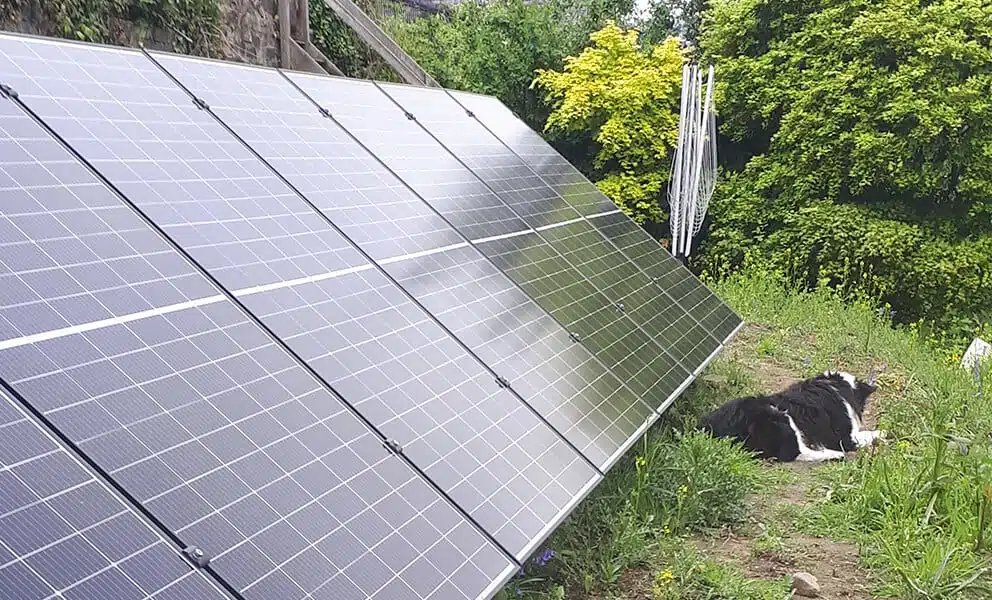
When it comes to solar panels for our homes, the first image that usually springs to mind is panels mounted on rooftops, but recently we have seen a rise in interest upon domestic ground-mounted solar panels. In this case study, our client Bruce shares his own journey to shed some light upon a P4 ground-mounted solar installation.
Key Details
"Back in August 2022, we were on a fixed rate tariff with OVO Energy. Events in early 2022 had caused energy prices to rocket but we were cocooned in our fixed rate tariff and were completely unaffected by the price surge. However, we were aware that come March 2023, we would be in for a very big shock. Our thoughts turned to solar power but the big problem we had was that our roof area was not big. Nonetheless, we did have a large piece of land at the back of our house and we decided that a ground-based installation would be our best option; the only issue was is that we had little idea where to start. I discovered a company here in Sowerby Bridge that did ground-based installations, so I popped in one afternoon to make enquiries. The man I spoke to listened to what we were looking for and then diplomatically, told us that our project was too small for his company, but he did know a man who may be able to help. That is how we first heard of Peter Maddocks.
We contacted Peter and he came to assess our situation and requirements. I explained what we were looking for and where we would like the panels. Peter explained why our plan was not the best and outlined his vision for our project and took lots of measurements and made notes, even crawling around our attic space. One of the biggest hurdles was not, in fact, placing the panels. Our field is steep with no level areas but Peter said that a digger for a day would give us the flat area required for our panels. The bigger problem would be connecting the panels to our meter.
Peter went away and sometime later sent us through a detailed plan with costs for our installation. He had planned the largest installation we could have as residential users and provided detailed costings, not just for the price of the installation but also for the financial benefits over 25 years. Obviously with any solar energy project there are 2 variables that cannot be accurately planned for - the weather and energy prices for consumers. We were quoted for 16 panels, 1 inverter, 3 batteries and all the cables, installation, and connection.
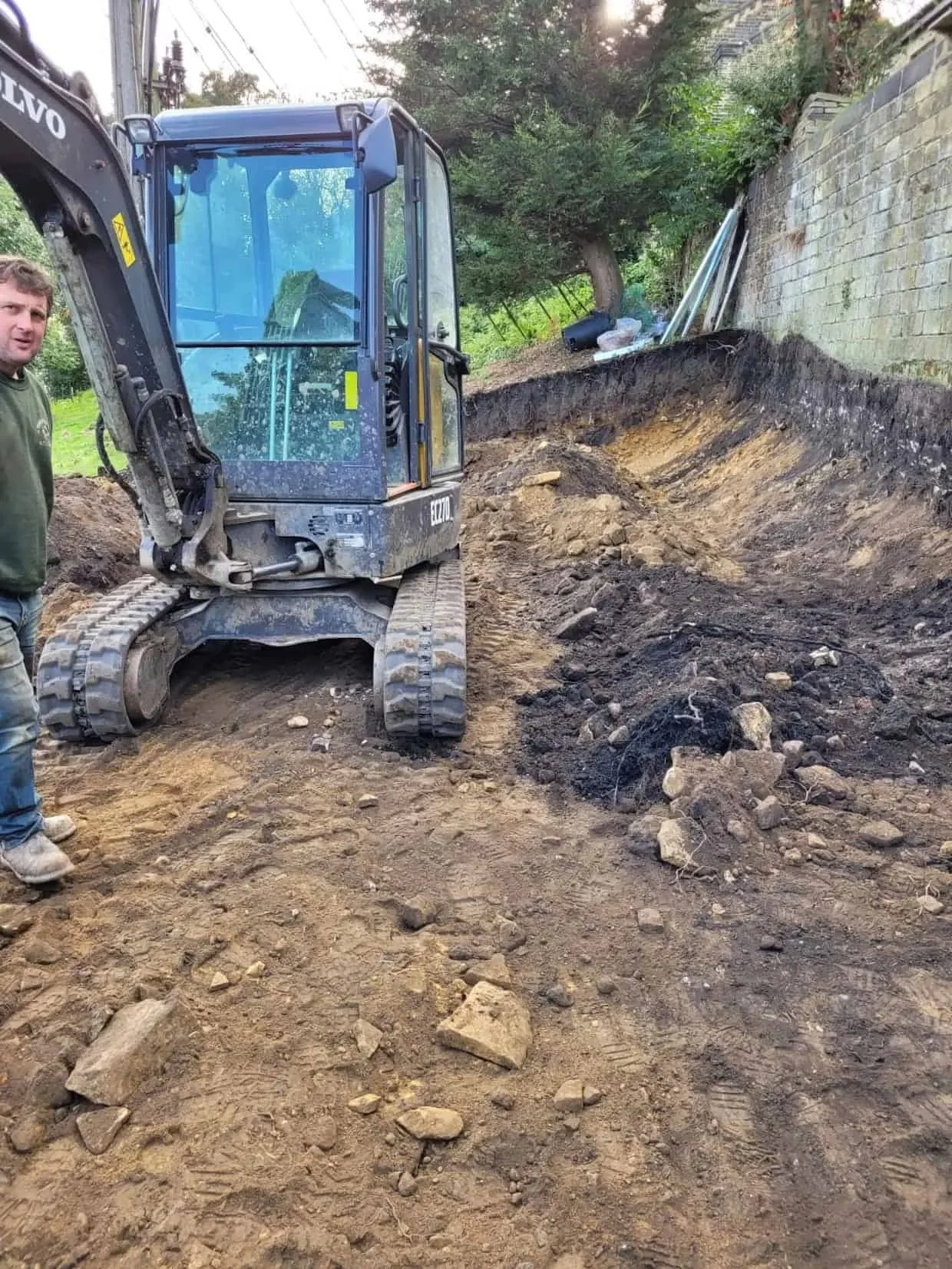
Once we had agreed to proceed with P4 Solar, the first phase was completed in early October and Peter's digger man (Jim) made a very grand job of carving out a large area for the panels. Peter had already explained to us that normally holes would be dug for concrete to be poured for the seating of the frames for the panels. However, the significant hurdle was getting a sufficient quantity of concrete to the solar panel location because the access for large vehicles was not possible.
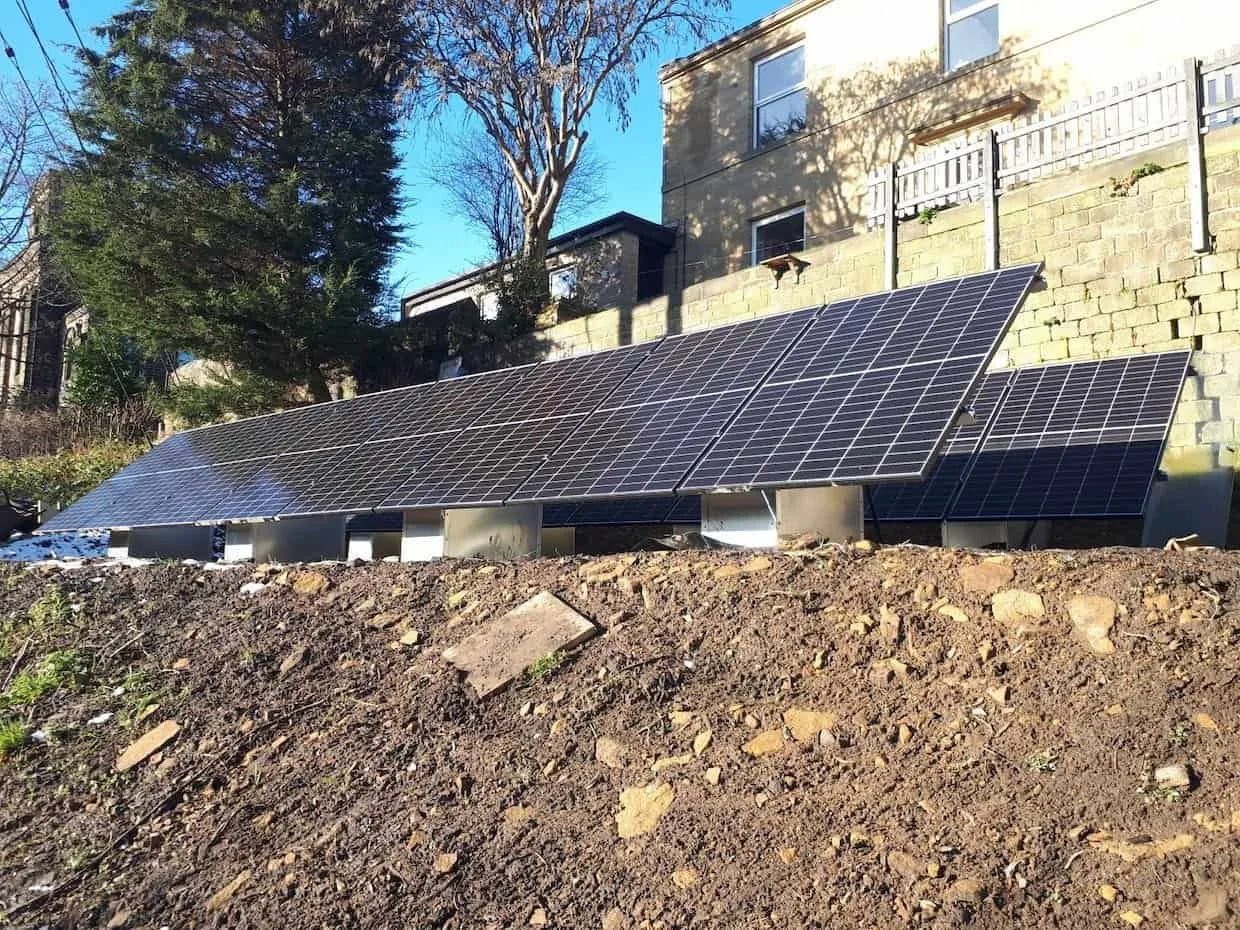
Peter was constantly evaluating our requirements and one day I received a photo from Peter who informed me that he was at an industry exposition and had found the best solution for us. The picture was of 2 metal boxes, filled with ballast and with frame and panels attached. Peter explained that this was a new product, the nest he had seen, and that he would get hold of it for us as soon as he could.
We originally had been told that we could expect to have our panels installed and working in November, then by Christmas, but solely due to the lack of availability of the new and innovative ground units, things did drag on a bit. This was out with the control of P4 Solar and any delay in our installation was due to others outside of P4 Solar.
Finally, on 17th January the workers arrived and started on the installation proper. Neil knows his stuff and listened to our suggestion as of where to locate the inverter and batteries. The original plan had been to run the cables from the field, up to the terrazzo (patio to everyone else), up the side of the house and to then be inserted into the attic where the inverter and the batteries would be situated. However, while waiting for our installation, we had time to rethink this and so we suggested to Neil that the batteries would be easier to install on the wall at the top of the cellar stairs. Neil took this on board, tweaked the idea a bit and so we ended up with a more direct route from panels to inverter. Neil arranged further cabling to our meter and on 19th January we started generating electricity. Since then, we have been very pleased with our panels and are enjoying the benefits of having solar panels that were installed by P4 Solar. P4 Solar took care of all the paperwork that went with the installation and liaised with relevant companies for the commissioning of the installation and the export to the grid of our excess electricity.
Peter had recommended Octopus energy to us as they offered the best rates overall for import and export. We joined on Peter's recommendation and we signed up with both Peter and ourselves benefitting from the introduction credit.
P4 Solar's expert team sorted out all the paperwork. Freddie had early information of a new tariff with Octopus (Octopus Flux) which we have switched to and are reaping the benefits of that. We are still getting used to it and tweaking our timings but essentially, we sell 50% of our battery capacity between 4pm and 7pm, buy energy back to fill our batteries between 2am and 5am (for a much lower price per kWh) and when the panels wake up at about 5.30am, the energy we produce tops up the batteries a little more. This provides the electricity we need and then after 7am, we are usually exporting (and making money!!!) again. In our first full month with Octopus Flux, even though we were still using the central heating, at the end of April our bill for the month (25th April to 23rd May) showed we had been paid £90 from the electricity exported from our panels. Additionally, and more difficult to quantify, we had not bought electricity for much of our electricity consumption and the net cost for the billing period was £70 which covered the electricity we bought and the gas we had used. The £90 had offset our gas costs by £30. We expect better things for our next bill as we have not used central heating.
So pleased are we with P4 Solar and the tariff from Octopus, we are in the process of getting 2 more batteries from Peter to increase our storage capacity to 16kWh; if we buy 8kWh each morning between 2am and 5am and then sell 8kWh between 4pm and 7pm, over the course of a year we would make a profit of about £460. We are still finding our feet with the charging and discharging of the batteries, but one thing to consider is, if you are using your electric oven to cook your evening meal, then do not sell as much electricity from your batteries while the oven is on!!!
Looking ahead, our installation has thrown up ideas we had not considered when we set out on this solar journey. Back in November our old gas combi boiler broke down twice in 10 days. Peter's original detailed plans got us thinking and we have now made the decision to rip out our central heating, replace our combi boiler with a water heater for our hot water requirements and install electric panel heaters. The advantage to us is that we do not need to replace each central heating radiator with an electric heater. We will start with 3 large panel heaters and 2 towel rails, knowing we can add more panel heaters as required during the winter. Yes, we had considered having an electric water heater instead of a gas one, but the main problem we had was the main fuse for the house. We were advised that we should have a 100amp main fuse instead of the 60amp fuse we have. Northern Power came to assess us and as we were on a loop with next door, they would have to dig up the road, get temporary traffic lights in to do the digging, take us off the loop and give us our own direct supply. This a would have cost well in excess of £3000 and was not an expense we would consider. We were advised that to upgrade to an 80amp fuse would cost nothing and so we opted for that instead. I was advised by the guy from Northern Power that there is a plan in the pipeline to upgrade all houses to 100amp. This is being driven by the government to encourage more people to generate their own power.
We feel that moving away from gas central heating will be a positive move, given the potential of our solar panel installation, but the only real consideration is whether there will always be a tariff somewhere that allows one to buy electricity at a lower rate and sell it back at a higher rate. The other consideration is of course the weather, and that cannot be predicted.
Overall, we have been extremely pleased with our installation and our experience with P4 Solar has been very positive from the moment we first called Peter last year. We had to call P4 Solar as one our batteries stopped working but Neil came round, checked it, and conferred with Lux Power. One week later, P4 Solar replaced the offending battery under its guarantee, even sorting out all the paperwork for us."
Customer comments
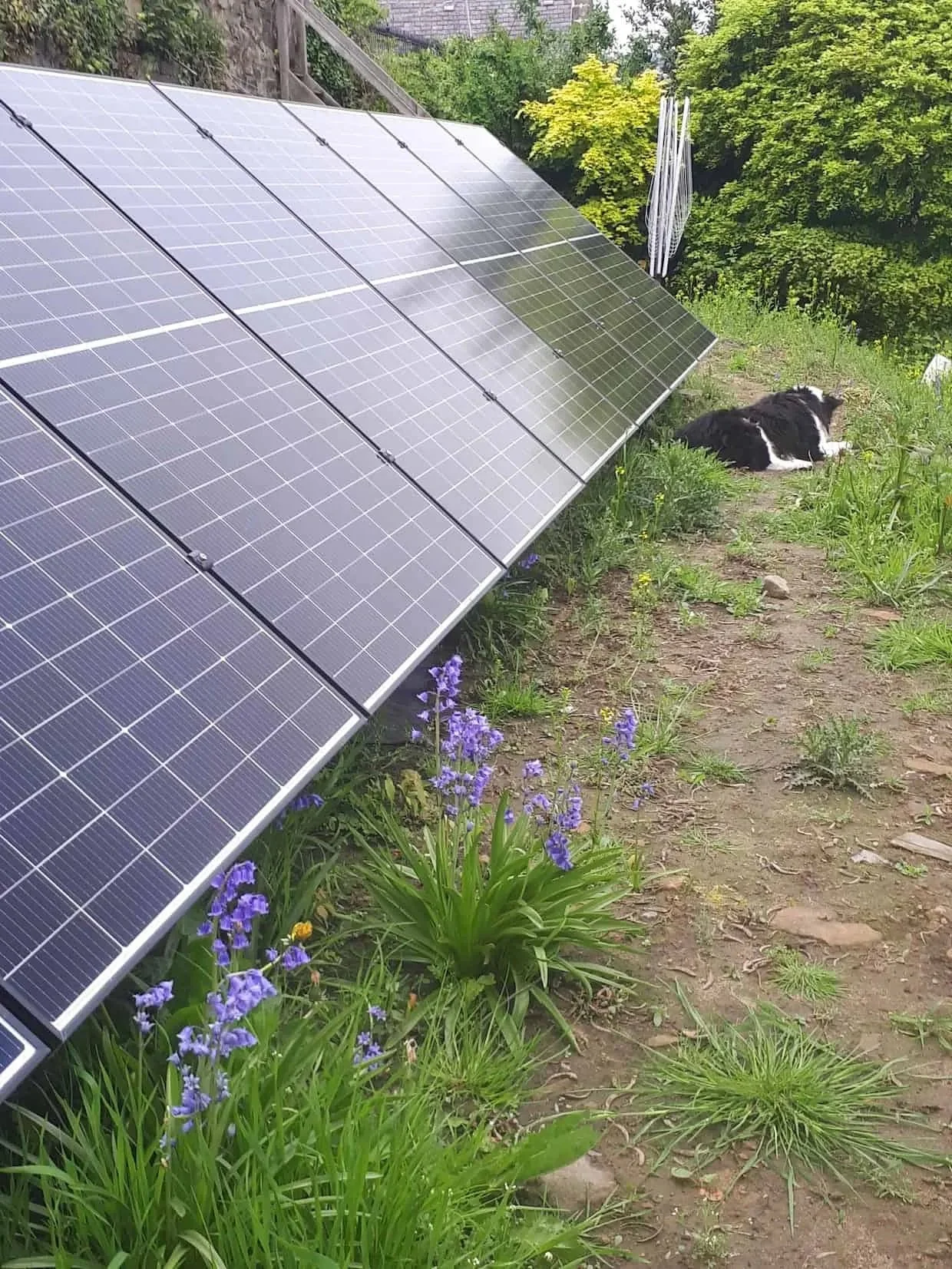
I have no hesitation in recommending P4 Solar. We needed a ground installation and it was difficult to find someone local to do it for us. P4 Solar were recommended to us. Right from the start I knew this was a company in which we could trust to place our project. Peter was constantly re-evaluating our needs and providing a better solution when new ground installation methods became available. Planning an installation in mid-winter will, of course, throw up delays attributable to Mother Nature, but we went live on 19th January and our electricity bill has already dropped to virtually zero.I have every confidence in the installation that P4 Solar have provided and my thanks go to Peter, Neil, James, Matthew and Freddie for their patience with me and taking the time to explain things (more than once!!) to me.
Bruce Tait
Thinking About Battery Storage or Solar Panels for Your Home?
Speak to P4 Solar about a tailored system designed around your property, energy usage and long-term savings.